The mechanism
Your coffee shop has one pressure curve. This machine ships with seven.
A café locks one recipe and pulls every bean through it. Fellow publishes the seven its Series 1 arrives with. The numbers explain a lot.
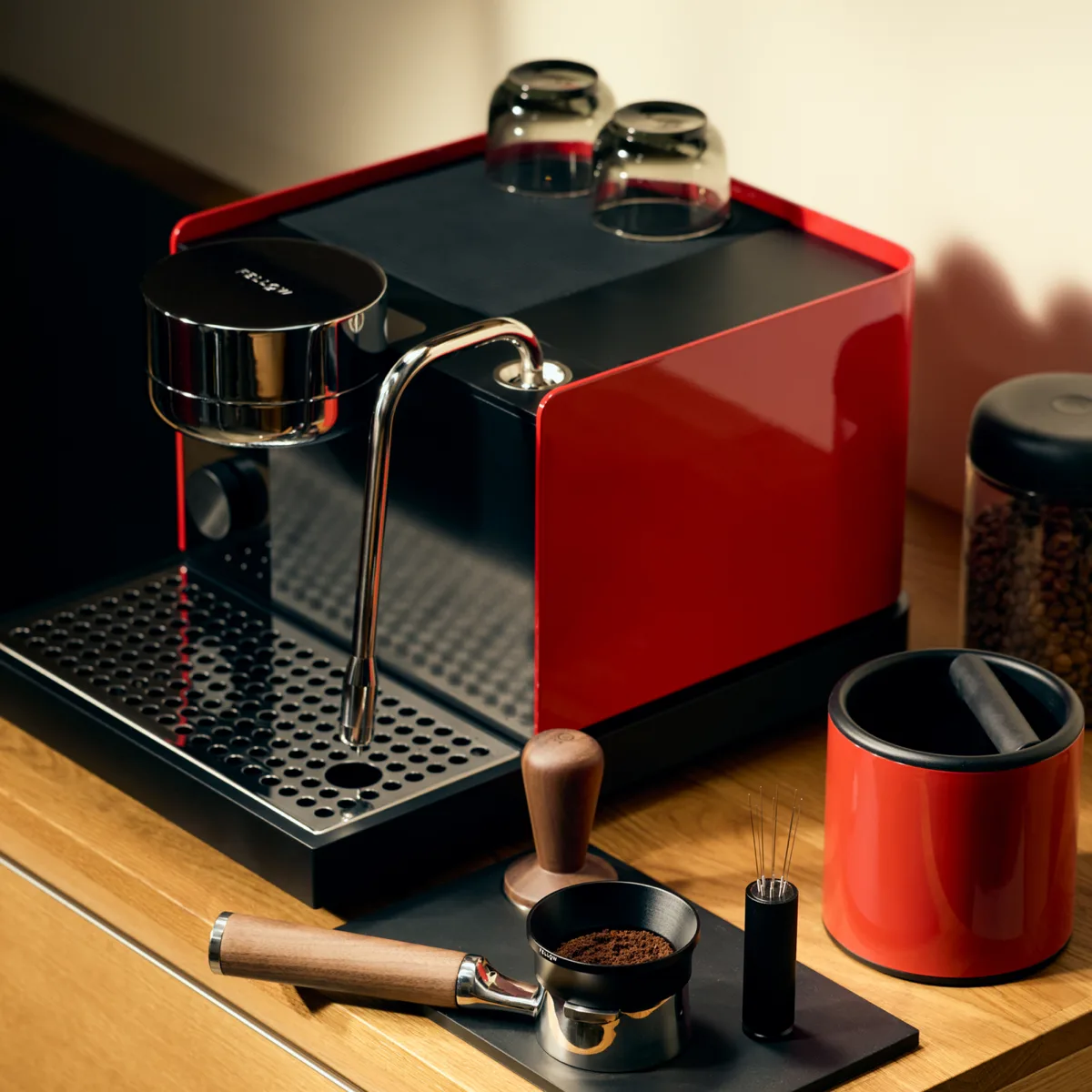
You buy the same bag your café buys. You grind it fresh. You weigh the dose. And the shot you pull at home still tastes flatter, or sharper, or just less finished than the one you paid five dollars for on the way to work. The usual explanations are the barista's hands, the freshness of the beans, or the fact that a commercial machine costs as much as a car.
All three are real. None of them is the biggest one. The biggest one is a single number that the café chose once, years ago, and has not changed since.
The café's settingNine bar, twenty eight seconds, every cup of the day
Espresso is water pushed through a compressed bed of coffee. Two dials decide almost everything about how that goes: how hard the pump pushes, measured in bar, and how long it keeps pushing. Specialty coffee settled on an answer to both decades ago, and Fellow states it plainly in its own documentation of the profiles its espresso machine ships with:
This is the classic 9 bar profile that most modern specialty coffee shops use to make espresso in a cafe. The coffee is extracted at a relatively high temperature at 9 bar for approximately 28 seconds. Fellow, Series 1 default profiles
Drawn out, that is not a curve at all. It is a rectangle. Pressure goes to nine and stays at nine until the shot is cut.
Profile 1 of 7
Classic 9 Bar. 93 °C, ratio 1:2, no pre-infusion, 28 seconds at a flat 9 bar.
Recipe published by Fellow. The shape is the point: one pressure, held flat, from the first drop to the last.
There is nothing wrong with that rectangle. It is a good, safe, repeatable answer, and a shop that pulls four hundred shots between seven and eleven in the morning needs exactly that. What it cannot be is right for everything.
Why one setting cannot fitA light roast and a dark roast want opposite treatment
Roast level changes how easily coffee gives up its solubles. Darker coffee dissolves faster, so pushing it as hard as a light roast drags out the compounds nobody wants. Fellow writes its dark roast profile to do less work, on purpose: 90 °C, 8 bar, 27 seconds, and a short 1:1.5 ratio, which it says is meant to avoid the harsh, ashy or overly bitter flavors that show up when dark roasts are pushed too far.
Its light roast profile is the mirror image. 94 °C, a longer 1:2.5 ratio, five seconds of gentle pre-infusion, then a full 9 bar, all of it designed to extract more, not less. Same machine, same eighteen gram dose, opposite instructions.
Three roasts, three shapes
The same dose of 18 g, treated three different ways, because the coffee is not the same coffee.
Note the dark roast line sitting a full bar lower and stopping sooner, and the light roast tailing off at the end instead of being cut at full pressure.
Your café picked one row of that table. It had to. It has one group head, one queue, and one bag of house blend that has to work for the flat white and the cortado and the person who orders a straight double.
The first ten secondsThe part of the shot that happens before the pressure arrives
Look again at the light and medium curves above and you will see a low step at the start that the café profile does not have. That is pre-infusion: a few seconds at around three bar, wetting the coffee gently before the pump commits. Fellow describes what it is for in the same document, saying the short pre-infusion helps evenly saturate and set the puck for stable flow.
A dry puck hit with nine bar can crack, and water takes the crack instead of the coffee. That is the channel that makes one shot gush and the next one choke, using the same grinder, the same dose and the same hands. Pre-infusion is the cheap insurance against it, and the classic café profile has it switched off.
With and without
Modern Arc spends its first ten seconds at 3 bar and eases into full pressure. Classic 9 Bar starts at nine.
Both reach the same peak. They arrive there very differently, and they leave differently too.
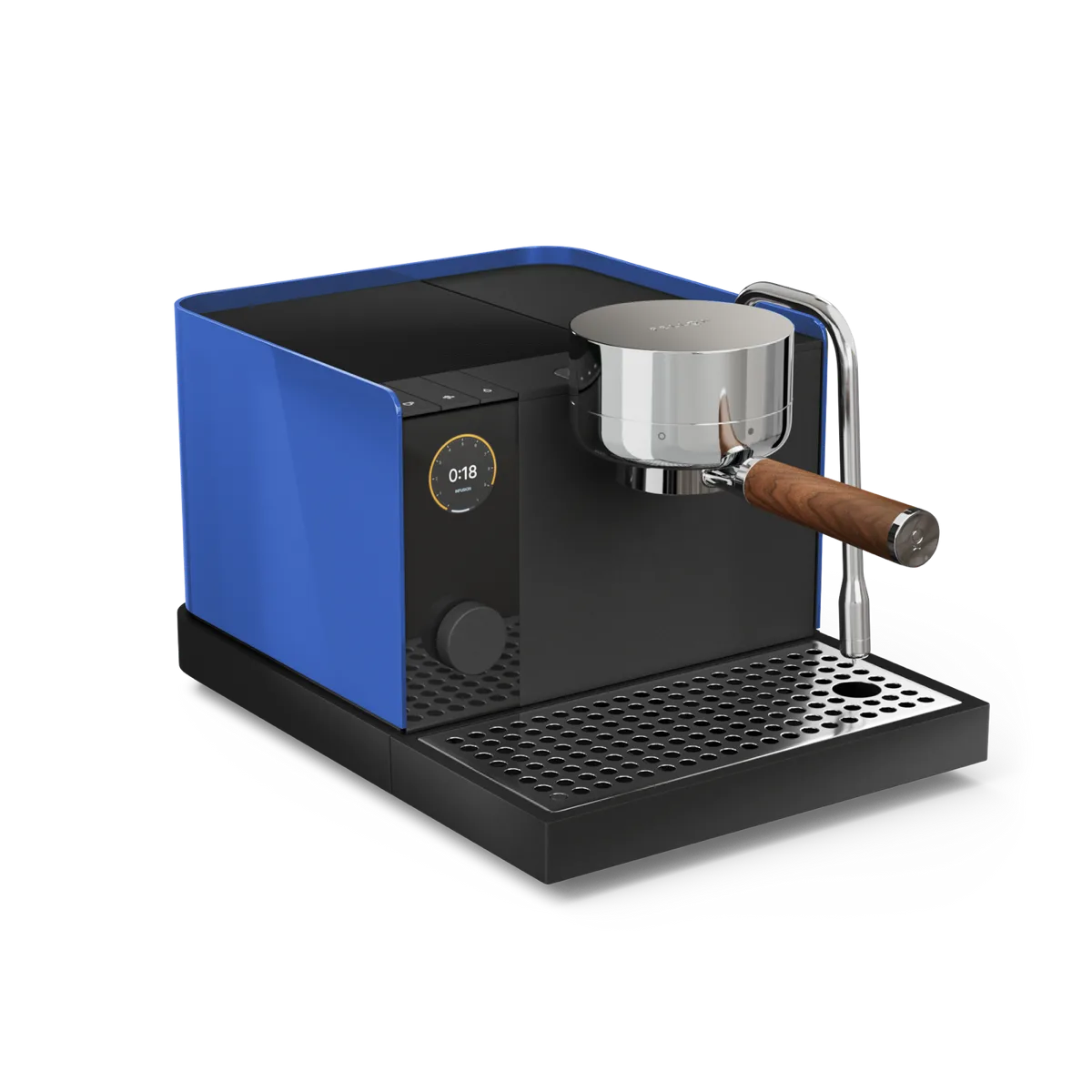
The shot that falls from nine bar down to four
Before pumps, espresso machines used a spring. The barista pulled a lever, the spring compressed, and as it released it pushed water through the coffee with a pressure that started high and fell away on its own. Lever machines still exist, they cost a great deal, and people who love them talk about the finish rather than the punch.
Fellow ships that shape as a factory setting. Ten seconds of pre-infusion at three bar, then six five second steps: 9 bar, 8, 7, 6, 5, 4. The company's own note on it is a description of taste, not of engineering: compared to a flat 9 bar shot, it says, a lever style shot usually tastes smoother and rounder, with a richer, silkier feel and less sharp bite.
The Lever profile
94 °C, ratio 1:2.5, forty seconds from first drop to last, and the pressure falls the whole way down.
Same coffee, same grinder, same hands. The only variable is the shape of that line, and it is a menu item.
This is the moment the promise in the headline stops being a slogan. Your café cannot serve you this shot on Tuesday and the flat one on Wednesday. Its machine holds one pressure and the queue does not wait. The pull that tastes rounder is not a better barista. It is a different curve, and at home the curve is a setting.
And the oppositeSix bar for seventeen seconds, on purpose
The last of the factory profiles goes the other way entirely. The Turbo Shot runs a coarser grind through 6 bar for about 17 seconds at a 1:3 ratio, trading body for speed and clarity. Fellow's expectation for the cup: a lighter, tea-like texture, high clarity, and a bright, clearly defined acidity, often with lower bitterness than a traditional nine bar shot.
It is the sort of thing a competition barista talks about and almost no shop will make you at eight in the morning.
All seven, one chart
Every profile the Espresso Series 1 arrives with, drawn from Fellow's published recipes.
The grey dashes are the café. Everything else is a button.
| Profile | Temp | Ratio | Pre-infusion | Infusion | Ramp down |
|---|---|---|---|---|---|
| Classic 9 Bar | 93 °C | 1:2 | Off | 28 s at 9 bar | Off |
| Light Roast | 94 °C | 1:2.5 | 5 s at 3 bar | 20 s at 9 bar | 5 s to 3 bar |
| Medium Roast | 92 °C | 1:2 | 5 s at 3 bar | 25 s at 9 bar | Off |
| Dark Roast | 90 °C | 1:1.5 | Off | 27 s at 8 bar | Off |
| Modern Arc | 92.5 °C | 1:2 | 10 s at 3 bar, smooth | 20 s at 9 bar, smooth | 5 s |
| Lever | 94 °C | 1:2.5 | 10 s at 3 bar, smooth | 5 s each at 9, 8, 7, 6, 5, 4 bar | Built in |
| Turbo Shot | 93 °C | 1:3 | Off | 17 s at 6 bar | Off |
The three roast profiles are written around an 18 g dose, and the fill rate during pre-infusion is published too, at 4.5 ml/s for most of them and 3 ml/s for the Lever. Publishing this at all is a choice. Most machines in this price bracket give you a dial marked light to dark and leave you to guess what moved.
Espresso Series 1, from Fellow. Seven factory profiles, and the numbers above are the factory settings.
See the Espresso Series 1Opens fellowproducts.com. Grinder sold separately.
The people who noticed were the ones with something to compare it to
Fellow publishes its reviews on the product page, good and bad, with the star breakdown visible. The most useful ones are not the raves. They are the people who arrived carrying another machine.
I am upgrading from a Breville Express and the difference is night and day when you can control the pressure.
5 out of 5 Beverly M. · April 20, 2026
I thought about a Decent, but then felt that ES1 had many of the same profile features that I wanted, and it was 3x cheaper (at the initial sale). […] I've found the "modern arc" profile to be the best one.
Aaabbb · March 11, 2026 · Verified buyer
I have been making espressos and espresso drinks for more than 3 decades on a variety of commercial machines. […] The display shows the extraction pressure and I have been able to set the shot temperature.
Ken27 · March 6, 2026 · Verified buyer
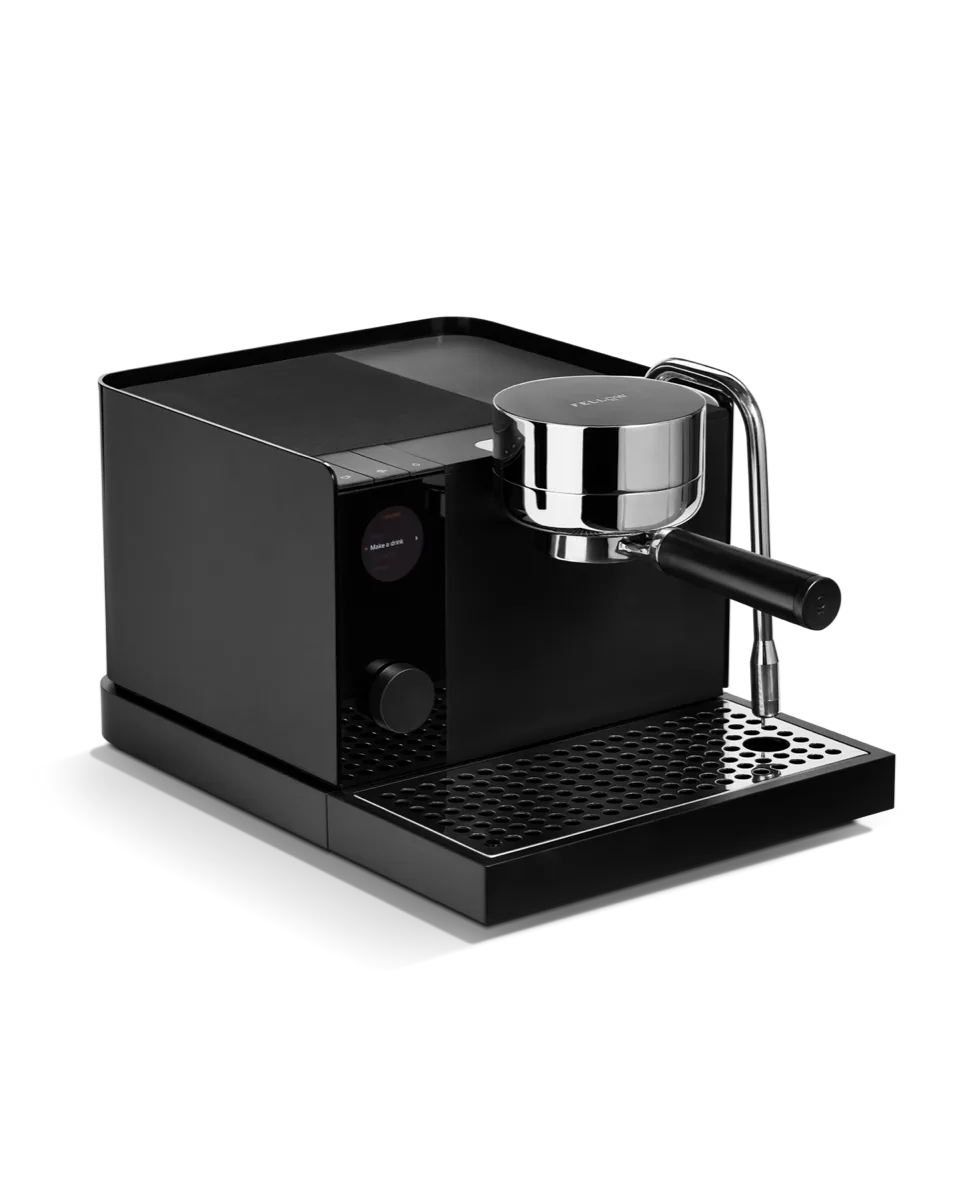
We are coming from an old-school lever machine with almost no electronics whatsoever. […] And the 2-minute warmup is a beautiful thing!
BenW · March 7, 2026 · Verified buyer
Every shot is consistent, and it shows you a graph (time & pressure).
J · March 24, 2026 · Verified buyer
And the one that matches the headline most literally, from someone who had spent years buying espresso rather than making it:
I have been drinking espresso for years but always relied on coffee shops. This is my first serious home espresso setup and the Fellow Espresso Series 1 changed that immediately. […] The pressure profiling and precision temperature control make a real difference compared to budget machines I tried before. You can actually feel that the machine is doing something intelligent not just forcing hot water through coffee.
Donna F. · March 25, 2026
What the same review page says when it is not being flattering
Eight people gave this machine one star. That number is on Fellow's own product page, next to the 113 who gave it five, and it is worth reading before you spend anything.
155 published reviews, 4.5 average
Read the three and four star reviews together and the same complaint keeps surfacing, from people who otherwise like the machine: the volumetric dosing is badly calibrated out of the box. One owner reports being given 8 ml shots where 36 ml was wanted. Another had to add fourteen seconds to an 18 g pull after checking it against a scale. A third spent a week on it before finding the setting.
It was giving me 8ml shots when it needed to be near 36ml. […] I quickly switched to manual dosing with a scale and the quality improved DRASTICALLY.
Baker · March 21, 2026 · Verified buyer
After calibrating with a scale I had to add an extra 14 seconds.
Graham C. · March 4, 2026 · Verified buyer
It is a real flaw and it lands on exactly the buyer the automation is meant to serve. It is also, by the reviewers' own account, a setting rather than a defect: the same people who report it go on to report shots running beautifully once the offset is corrected, and several of them expect firmware to close it. One four star reviewer sums the machine up as fundamentally sound with software still catching up, and adds that once properly calibrated for volumetric extraction, shots are consistent pull after pull, and the pressure graph is a nice touch for dialling things in.
Two other things worth knowing before you decide. The grinder is not included, and Fellow says so on the product page. And the machine ships with a two year standard warranty, with the option to extend.
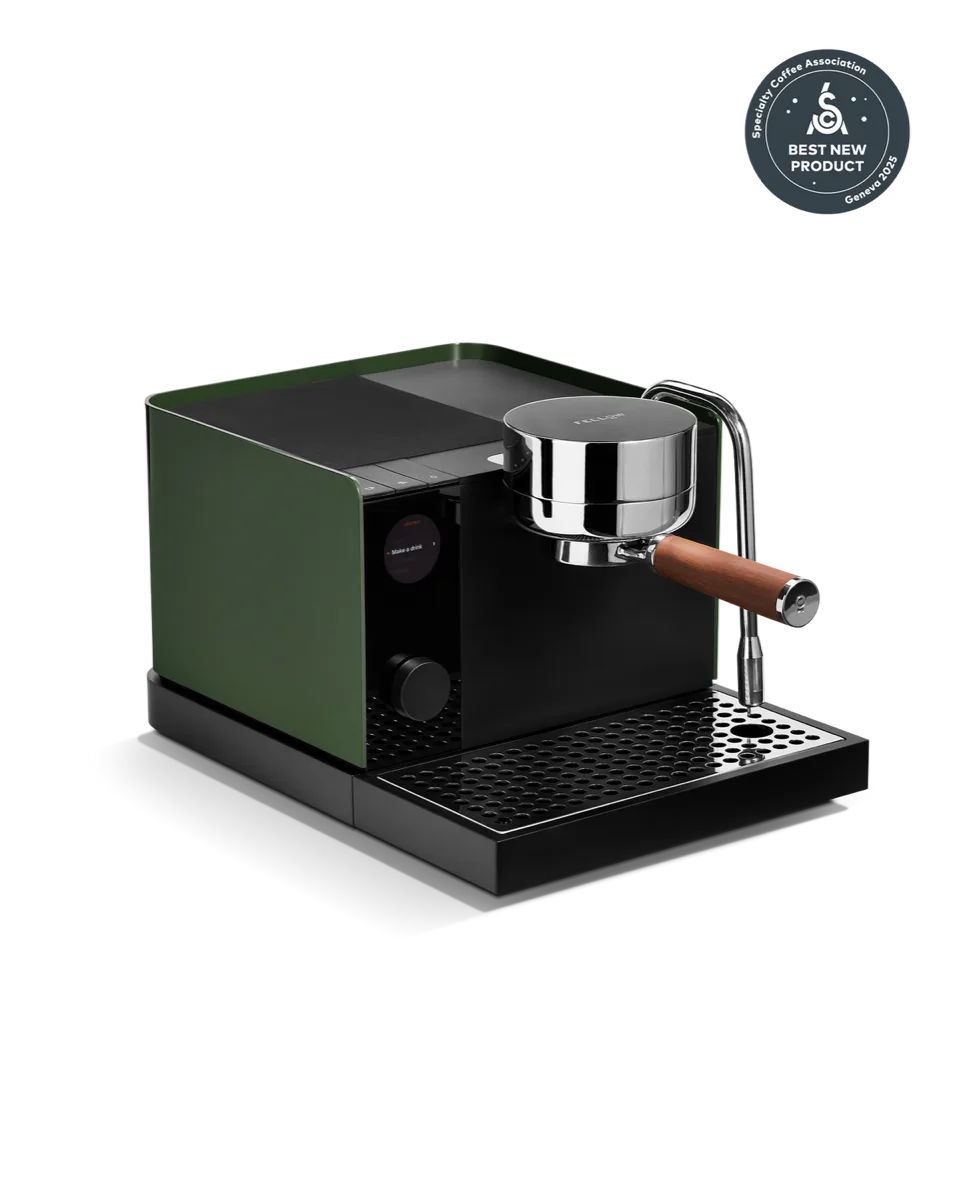
Three prices, and a grinder that is not in the box
Nobody buying at this level is comparing against a pod machine, and the reviews show what they are actually comparing against. One owner weighed it against a Decent and chose the Series 1 for having many of the same profile features at a third of the price. Another came off a twenty year old Gaggia. Another had cycled through Jura, Saeco and Miele all in ones and said the results never matched a proper setup. One reviewer who has spent three decades on commercial machines noted, almost in passing, that portafilters made for other machines such as La Marzoccos fit the Series 1 without issues.
One first time buyer put the honest caveat better than a spec sheet could: it is definitely an investment compared to machines with less features, and you also have to buy a grinder separately.
I love that this is a machine that is ready for my inexperience today and will be advanced enough for me to grow into.
Kelsey · March 6, 2026 · Verified buyer
This company has been arguing about tenths of a degree for years
Pressure is half the story and temperature is the other half. It is fair to ask whether a company known for kettles and pour over gear can hold a brew temperature under load. Fellow has published its own answer for a while, about a different product: the Stagg EKG electric kettle.
On the kettle, not the espresso machine
Most kettles use a mechanical on and off relay, so power is either at 100 percent or 0 percent. They overshoot, undershoot, and click. Fellow's EKG line uses a PID controller with pulse width modulation instead, varying the duty cycle rather than slamming the element on and off.
Fellow's published result: the EKG family heats and maintains water temperature to plus or minus 0.3 degrees Celsius. In a hold test of 600 ml at 200 °F, it reports a standard deviation of 0.27 °F for the Stagg EKG against 1.06 °F for the leading pour over kettle it compared with.
Source: fellowproducts.com, What's the point of a PID controller in an electric kettle. These figures describe the kettle. They are here as evidence of how long this company has been working on temperature, not as a specification of the espresso machine.
Hold test, 600 ml at 200 °F
Standard deviation of the held temperature. Lower is steadier.
Figures published by Fellow for its kettle line. Bars drawn to scale from those two numbers.
Who should ignore all of this, and who should not
If you drink one cappuccino a day, always from the same medium roast blend, and you have never once wondered why it tasted different on Thursday, none of this is for you. The café setting is the right setting. A machine that ships with seven curves is seven times more machine than the question deserves.
If, on the other hand, you have ever bought a bag of light roast Ethiopian and watched it taste thin and sour through the same machine that makes your dark blend sing, you have already met the limit this article is about. It was never your technique. It was one number, held flat, applied to two coffees that wanted opposite things.
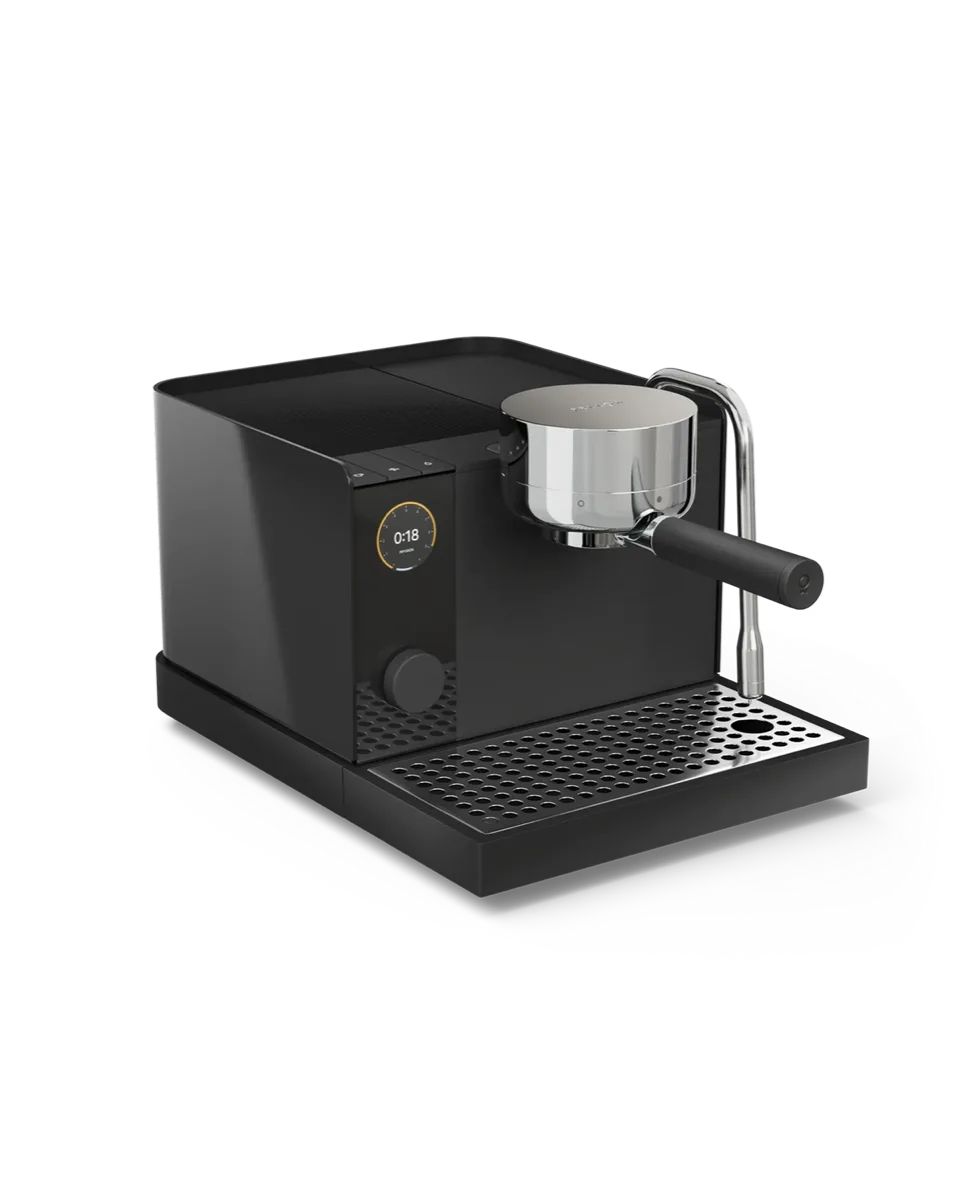
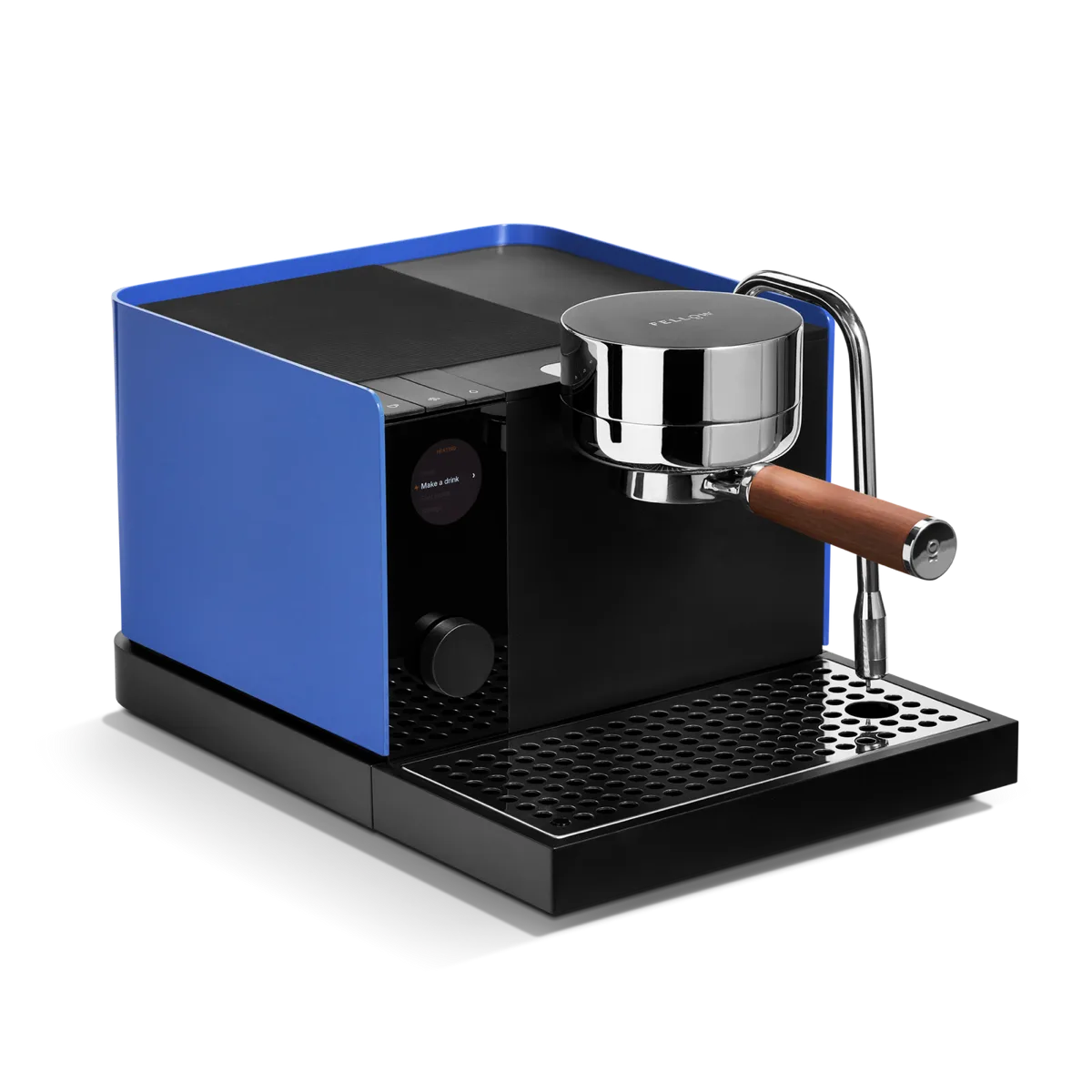
Fellow's own line for the machine is the least salesy thing on its product page, and it is the accurate one: the foundation for an espresso habit, not just an espresso machine. The habit is the part where you stop ordering the same shot every day, because for the first time you are the one choosing it.
Your favorite coffee shop is not going to get worse. You are just going to notice, some Saturday, that the thing you made at home had a shape to it that theirs did not. That is the whole promise, and it is a smaller and more honest one than it first sounds.
Seven published profiles, a pressure graph on the screen while the shot runs, and every recipe above set at the factory.
See the Espresso Series 1Opens fellowproducts.com. From $1,499.95. Two year warranty. Grinder sold separately.